poster
HomeProductsBall ValveEccentric Hemispherical Valve
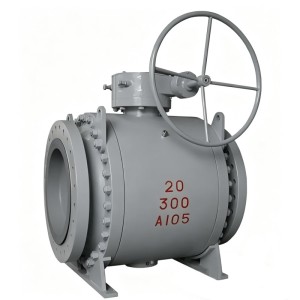
Eccentric Hemispherical Valve

Eccentric Hemispherical Valve

Structure and Principle

• The valve core is hemispherical, with its rotation center eccentric to the valve body center.

• When open: The hemisphere disengages from the valve seat, resulting in no friction and low torque.

• When closed: The hemisphere presses against the valve seat, forming a line/surface seal.

• Typical structures: Side-mounted/Top-mounted, eccentric shaft, eccentric hemisphere.

Product Description

Key Features

1. Excellent Sealing Performance: Hard seals achieve zero leakage, while soft seals provide even tighter sealing.

2. Wear-Free and Long Service Life: Opening and closing does not scrape the valve seat, making it more wear-resistant than ordinary ball valves.

3. Anti-Stuck and Self-Cleaning: The hemispherical rotation has a scraping effect, preventing mud, dust, and slurry from causing blockages.

4. Low Flow Resistance and Smooth Flow: The near-straight-through flow path reduces pressure drop, making it suitable for high flow rates.

5. Easy On/Off: The eccentric structure significantly reduces operating torque, suitable for both pneumatic and electric operation.


Common Parameters

• Nominal Diameter: DN25~DN1400

• Pressure Rating: PN10/PN16/PN25, Class150

• Temperature Range:

◦ Soft Seal: -20℃~180℃

◦ Hard Seal: Up to approximately 450℃

• Valve Body Material: Cast Steel WCB, Stainless Steel 304/316, Ductile Iron

• Sealing Material: Hard Alloy, Stainless Steel Welding, PTFE, etc.


Applicable Operating Conditions

• Wastewater treatment, mud, slurry, slag-water mixtures

• Fly ash, dust, flue gas, coal gas

• Chemical slurry, papermaking black liquor, particulate media

• Urban heating, water supply and drainage, circulating water systems

• Cut-off control requiring wear resistance, anti-clogging, and long service life


Applicable Industries


Municipal water supply and drainage, wastewater treatment, metallurgy and mining, power generation, fly ash, petrochemicals, papermaking, coal, cogeneration, etc.
Online Inquiry

Related Products

V-Type Ball Valve

V-Type Ball Valve

Structural Features

• V-shaped ball core: The hemispherical valve core has a V-shaped notch, which is the core component for regulation and shearing.

• Valve seat: It mates with the V-shaped notch to form a sealing surface. Soft seals (TFM, etc.) are suitable for clean media, while hard seals (welded or sprayed hard alloy) can be used in high-temperature, high-pressure, highly corrosive, or particulate-containing conditions.

Working Principle

• Regulation Function: As the valve core rotates, the overlap area between the V-shaped notch and the valve seat continuously changes, creating an equal percentage flow characteristic (opening degree and flow rate are logarithmically related), achieving high-precision control within the 30%-70% opening range.

• Shearing and Self-Cleaning: The V-shaped notch edge, in contact with the valve seat, cuts off fibers and small solid particles in the medium, preventing blockage; the relative movement between the valve core and valve seat during rotation scrapes away media residue on the sealing surface, achieving self-cleaning.

Pneumatic Floating Ball Valve

Pneumatic Floating Ball Valve

Structural Features

• The ball has no lower support shaft; it is held only by the valve seats at both ends, allowing for slight floating under medium pressure.

• The valve stem is top-mounted, connecting to the ball, and is only responsible for rotation, not bearing axial pressure.

• Double-sided sealing: When closed, the ball is pushed towards the outlet valve seat by the medium pressure, forming a self-tightening seal.

• Simple structure: The valve body, ball, valve seat, valve stem, and stuffing box have few components, making maintenance convenient.

Working Principle

• Opening: Rotate the valve stem 90°, aligning the ball's through-hole with the pipeline, allowing smooth media flow.

• Closing: Rotate the valve stem 90° in the opposite direction, aligning the ball's through-hole perpendicular to the flow path; media pressure pushes the ball tightly against the outlet valve seat, with a tighter seal at higher pressures.

Fluorine-Lined Ball Valve

Fluorine-Lined Ball Valve

Structural Features

• Valve body is generally made of carbon steel or stainless steel, with the inner wall entirely lined with PTFE.

• Common lining materials: F4 (PTFE), F46, PFA, PO, etc.

• The ball is also PTFE-coated/lined for full-flow-channel corrosion protection.

• The structure is mostly a floating ball, with flange connections as the primary method.

• The sealing surface has inherent corrosion-resistant and anti-stick properties.

Three-Way Ball Valve

Three-Way Ball Valve

Structural Features

• Valve body is a three-way structure with L- or T-shaped ports.

• The ball has an L-shaped or T-shaped channel.

• Mostly a floating ball structure; some large-diameter models are fixed ball.

• Common connections: threaded, flanged, welded, quick-connect.

• Actuation methods: manual, pneumatic, electric.

+86 19858780995

+86 19858780995

+86 19858780995

+86 19858780995

19858780995@163.com