poster
HomeProductsBall ValveThin Ball Valve
Thin Ball Valve

Thin Ball Valve

Structural Features

• Ultra-compact: 40%~60% shorter in length and 30%~50% lower in height than standard ball valves

• Lightweight: 30%~50% lighter, easier installation

• Connection: Mainly wafer type (clipped between two flanges), flange type is also available

• Opening and Closing: 90° rotation of the ball for quick shut-off/connection

• Low Flow Resistance: Full-bore design ensures smooth media flow and low pressure loss

• Excellent Sealing: Soft seal (PTFE/PPL) or metal seal, zero leakage

• Optional Features: Anti-static, fire-resistant structure, safety locking

PRODUCT DETAIL

Working Principle

Same as a regular ball valve:

• Ball rotates 90°

• Channel aligned with pipeline → Fully open

• Channel perpendicular to pipeline → Fully closed


Applicable Scenarios

• Equipment/devices with extremely limited space

• Modular, skid-mounted equipment

• Mobile equipment such as ships, vehicles, and aircraft

• HVAC, light industry, food, and pharmaceuticals

• Compact piping for chemical, petroleum, and water treatment


Main Parameters

• Nominal Diameter: DN15~DN300

• Pressure: PN16/PN25/Class150

• Temperature:

◦ Soft seal (reinforced PTFE): -29℃~180℃

◦ PPL/metal seal: Maximum approximately 250℃


Main Materials

• Material:

◦ Valve body: WCB, 304, 316, 316L

◦ Ball: 304, 316, hard chrome plated

◦ Seal: PTFE, reinforced PTFE, PPL, metal seal

•Drive: Manual, pneumatic, electric

Online Inquiry

Related Products

3 PIECE BALL VALVE

3 PIECE BALL VALVE

Structural Features

• The valve body is composed of three forged steel pieces bolted together.

• The valve core, seat, and seals are all housed in the middle valve body section.

• Common connection methods: threaded (NPT/BSP), welded, quick-connect.

• Generally small diameter: mainly DN6~DN100.

• Mostly floating ball structure, reliable sealing, and compact size.

Pneumatic Floating Ball Valve

Pneumatic Floating Ball Valve

Structural Features

• The ball has no lower support shaft; it is held only by the valve seats at both ends, allowing for slight floating under medium pressure.

• The valve stem is top-mounted, connecting to the ball, and is only responsible for rotation, not bearing axial pressure.

• Double-sided sealing: When closed, the ball is pushed towards the outlet valve seat by the medium pressure, forming a self-tightening seal.

• Simple structure: The valve body, ball, valve seat, valve stem, and stuffing box have few components, making maintenance convenient.

Working Principle

• Opening: Rotate the valve stem 90°, aligning the ball's through-hole with the pipeline, allowing smooth media flow.

• Closing: Rotate the valve stem 90° in the opposite direction, aligning the ball's through-hole perpendicular to the flow path; media pressure pushes the ball tightly against the outlet valve seat, with a tighter seal at higher pressures.

Fluorine-Lined Ball Valve

Fluorine-Lined Ball Valve

Structural Features

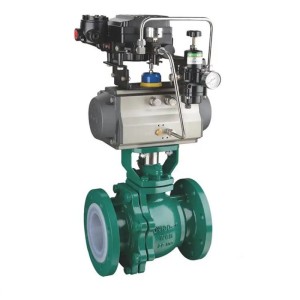
• Valve body is generally made of carbon steel or stainless steel, with the inner wall entirely lined with PTFE.

• Common lining materials: F4 (PTFE), F46, PFA, PO, etc.

• The ball is also PTFE-coated/lined for full-flow-channel corrosion protection.

• The structure is mostly a floating ball, with flange connections as the primary method.

• The sealing surface has inherent corrosion-resistant and anti-stick properties.

Fixed Ball Valve

Fixed Ball Valve

Structural Features

• The valve core is a fixed shaft structure, positioned by bearings/sleeves at the top and bottom.

• The valve core itself does not move back and forth; sealing is achieved by the valve seat pressing against the valve core.

• It is a bidirectional sealing structure.

• Common connections: flange connection, welded connection.

+86 19858780995

+86 19858780995

+86 19858780995

+86 19858780995

19858780995@163.com