poster
HomeProductsBall ValveFluorine-Lined Ball Valve
Fluorine-Lined Ball Valve

Fluorine-Lined Ball Valve

Structural Features

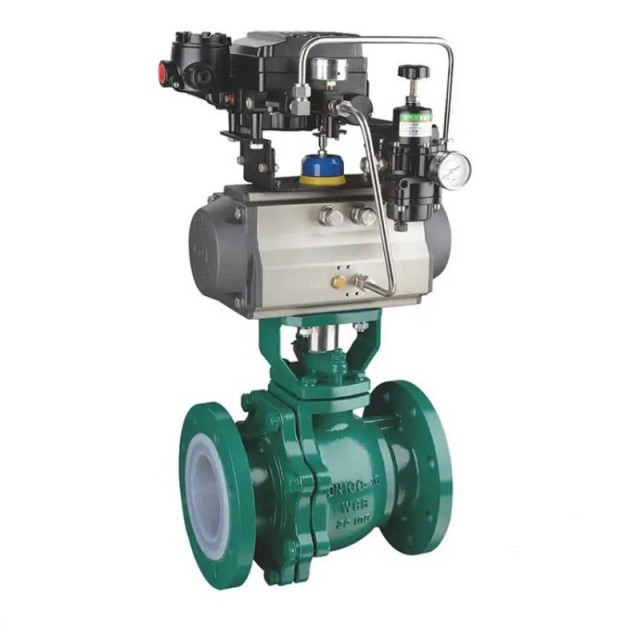
• Valve body is generally made of carbon steel or stainless steel, with the inner wall entirely lined with PTFE.

• Common lining materials: F4 (PTFE), F46, PFA, PO, etc.

• The ball is also PTFE-coated/lined for full-flow-channel corrosion protection.

• The structure is mostly a floating ball, with flange connections as the primary method.

• The sealing surface has inherent corrosion-resistant and anti-stick properties.

PRODUCT DETAIL

Working Principle

• 90° rotation of the ball achieves switching.

• The medium only contacts the fluoroplastic liner, preventing corrosion of the metal valve body.

• Smooth flow path, no scaling, no media adhesion.

• Soft-seal structure, achieving zero leakage.


Core Advantages

1. Superior Corrosion Resistance
Resistant to almost all acids, alkalis, and organic solvents, including concentrated sulfuric acid, liquid alkali, ketones, esters, aromatics, and alcohols.

2. Non-stick and Self-lubricating
Media does not easily adhere, resulting in low flow resistance and high flow rate.

3. Wide Applicable Temperature Range
Standard temperature range: -20℃ to 180℃; PFA can withstand even higher temperatures.

4. Excellent Sealing Performance
Suitable for toxic, harmful, highly corrosive, and volatile media.

5. High Cost-Effectiveness
Using fluoroplastic-lined carbon steel instead of expensive alloy valves results in lower costs.


Applicable Media

• Strong Acids: Sulfuric acid, hydrochloric acid, nitric acid, phosphoric acid

• Strong Alkalis: Liquid alkali, sodium hydroxide

• Strong Solvents: Acetone, MEK, xylene, benzene, various esters, alcohols

• Corrosive salt solutions, wastewater, chemical mixtures


Applicable Industries

• Chemicals, pesticides, dyes, electroplating, metallurgy

• Environmental protection, wastewater treatment, acid and alkali conveying systems

• Petrochemicals, fine chemicals, pharmaceuticals


Common Materials

• Connection: Flange connection

• Pressure: PN10, PN16, Class 150

• Lining: PTFE (F4), F46, PFA

• Valve Body: WCB carbon steel, 304/316 stainless steel

Online Inquiry

Related Products

Three-Way Ball Valve

Three-Way Ball Valve

Structural Features

• Valve body is a three-way structure with L- or T-shaped ports.

• The ball has an L-shaped or T-shaped channel.

• Mostly a floating ball structure; some large-diameter models are fixed ball.

• Common connections: threaded, flanged, welded, quick-connect.

• Actuation methods: manual, pneumatic, electric.

Thin Ball Valve

Thin Ball Valve

Structural Features

• Ultra-compact: 40%~60% shorter in length and 30%~50% lower in height than standard ball valves

• Lightweight: 30%~50% lighter, easier installation

• Connection: Mainly wafer type (clipped between two flanges), flange type is also available

• Opening and Closing: 90° rotation of the ball for quick shut-off/connection

• Low Flow Resistance: Full-bore design ensures smooth media flow and low pressure loss

• Excellent Sealing: Soft seal (PTFE/PPL) or metal seal, zero leakage

• Optional Features: Anti-static, fire-resistant structure, safety locking

Forged Steel Ball Valve

Forged Steel Ball Valve

Key Features

• High-Strength Material: Forging process removes porosity and looseness, resulting in dense grains, high tensile strength, and superior wear resistance compared to cast steel.

• Reliable Sealing: Soft seal (reinforced PTFE/PPL) or hard seal (metal-to-metal), supporting double sealing, fireproof and anti-static.

• Stable Structure: Available in two-piece/three-piece flange connections, fixed ball or floating ball structure, and a split valve body for easy maintenance.

• Highly Efficient Opening and Closing: 90° rotation, low torque, fast opening and closing, suitable for frequent operation.

• Wide Temperature and Pressure Compatibility: Temperature range from -196℃ to 450℃, pressure rating from Class 150 to 1500.

Fixed Ball Valve

Fixed Ball Valve

Structural Features

• The valve core is a fixed shaft structure, positioned by bearings/sleeves at the top and bottom.

• The valve core itself does not move back and forth; sealing is achieved by the valve seat pressing against the valve core.

• It is a bidirectional sealing structure.

• Common connections: flange connection, welded connection.

+86 19858780995

+86 19858780995

+86 19858780995

19858780995@163.com